
Most TV mounting goes wrong in the first ten minutes, before anyone picks up a drill. It goes wrong at the decision about where.
Find the studs, then decide
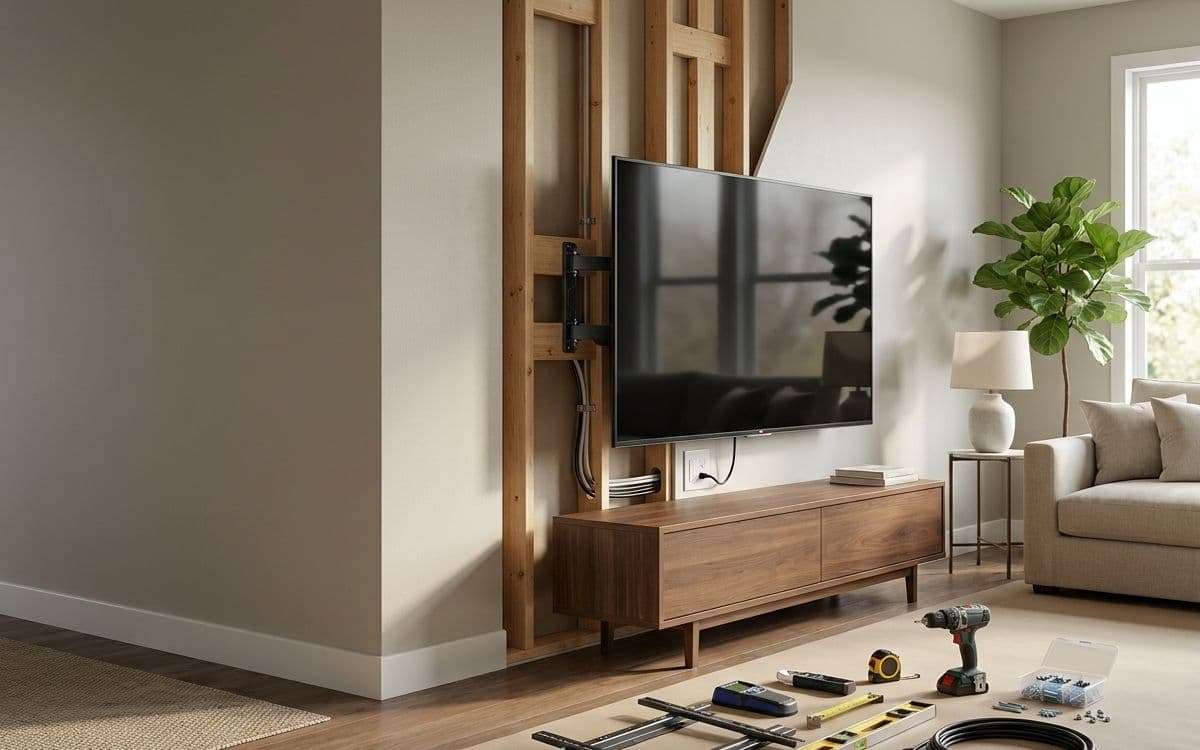
A modern large screen plus a full motion arm puts a real cantilever load on the wall, and the further the arm extends the more that load multiplies. That load belongs in structural timber, not in plasterboard with anchors, whatever the anchor packaging claims.
Standard stud spacing is 16 inches on centre, and 24 inches is common in newer construction. That spacing decides where the bracket can go, which means the wall decides the position at least as much as you do. Deciding the position first and hoping a stud is there is how brackets end up two inches off centre.
Brick, block and the exterior wall problem
Plenty of San Antonio homes have masonry where you want the television. Solid brick takes a proper sleeve anchor and holds extremely well. Hollow block is a different problem and needs a fixing designed for it.
The bigger issue with an exterior masonry wall is what is behind it. Drilling into an exterior wall means thinking about insulation, about moisture, and about not being able to run cable inside it. Interior partition walls are almost always the better answer, and if you have the choice, take it.
The fireplace question
People want the television above the fireplace because it looks tidy. Three reasons it usually is not the right call.
Height. Above a mantel typically puts the screen well above seated eye level, and you will feel it in your neck within twenty minutes. Heat, if the fireplace is used, because rising heat is not good for the electronics. And cabling, because a masonry chimney breast is the hardest place in the house to hide a cable run.
A tilting mount helps with the angle and does not solve the height. If the room genuinely has nowhere else, it can be done and done well. It should be a decision, not a default.
Cables are most of the difference
Anyone can hang a bracket. The difference between a job that looks finished and one that does not is whether you can see a cable, and that is decided before the screen goes up.
On a stud partition, running power and HDMI inside the wall to a recessed plate below the screen is straightforward. On masonry it usually is not, and the honest answer is trunking painted to match, or a different wall.
A typical mount takes one to two hours including the cable run. If the wall needs making good afterwards, that is a small patch and texture match on top. Worth knowing before rather than after.
Need this doing rather than reading about it?
Uncle Sam Handyman LLC covers a 35 mile radius at one rate, with a free written estimate before any work starts.